

A quarter of a billion-dollar contract with a rising critical mineral manufacturer says clearly: fluorspar is strategically indispensable, and relying on imports is too risky.
Earlier this month, Ares Strategic Mining was awarded as the sole contractor (the only one nominated) by the U.S. Department of Defense for $169M over five years to stockpile acid-grade fluorspar, with a ceiling of $250M for additional supply.
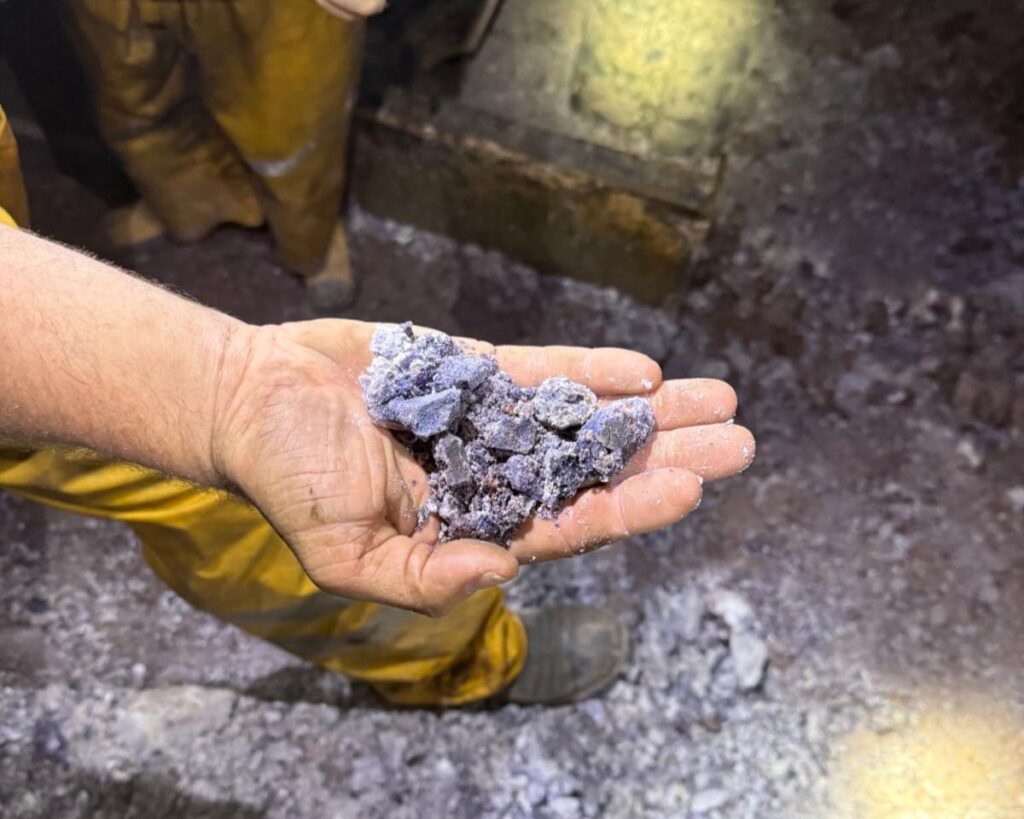
Acidspar is a high-purity form of acid-grade fluorspar, critical in defense systems, nuclear energy, lithium-ion batteries, advanced AI technology, and more buzzworthy industries.
In reviewing domestic suppliers, the DoD found just one qualified U.S. source: Ares Strategic Mining. What set them apart? There is no other domestic operation close to readiness, and their product’s purity is some of the best. It meets stringent standards that even importers struggle to match, including limits on arsenic, sulfur, and other impurities.
In the awarded contract, the Department of Defense acknowledged fluorspar’s role in nuclear energy supply chains. Under the agreement, all material must be non-radioactive and non-licensable under Nuclear Regulatory Commission (NRC) regulations, meeting the strict standards required for nuclear applications. High-purity fluorspar is used to produce hydrofluoric acid, a key input in converting uranium into uranium hexafluoride (UF₆) for nuclear fuel enrichment, placing Ares in another strategically critical market beyond defense stockpiling.
Contract Scope, Infrastructure, and Logistics
Ares is mandated to supply ~ 280,000 tons of acidspar over five years as part of the national stockpiling effort. That’s a substantial, multi-year commitment, giving ARES steady revenue and operational certainty.
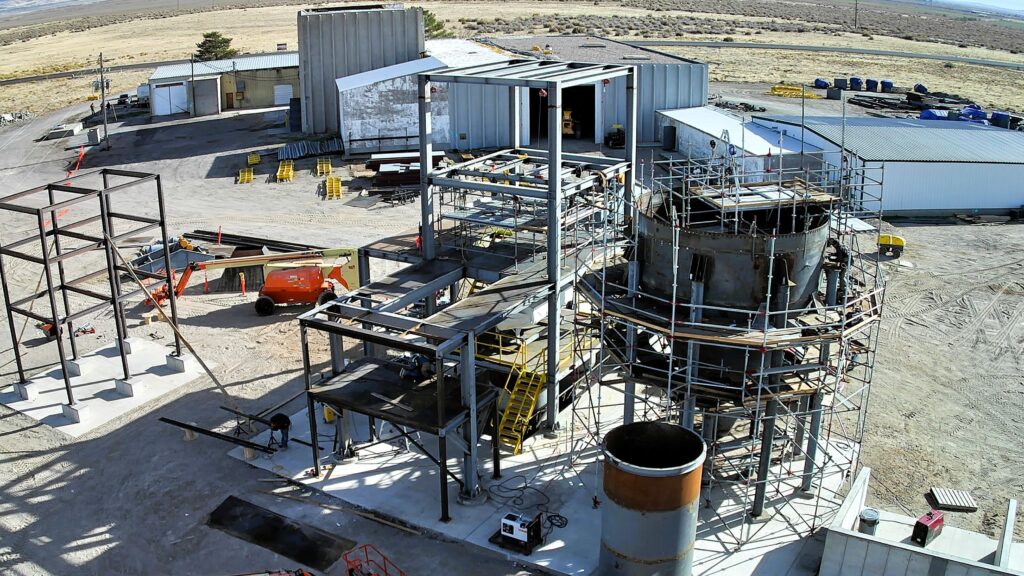
Two processing plants are currently under construction at their Delta, Utah property: an acidspar flotation plant and a metallurgical lumps plant.
The metallurgical lumps plant, scheduled to fire up early 2026, will supply U.S. steel and aluminum industries with ready-to-use fluorspar “lumps”.
The acidspar flotation plant will follow – it is fully engineered and delivered to site, and with additional support, assembly can be fast-tracked to be producing by late-2026.
The contract’s delivery terms are notably favorable for Ares. Shipments are made to a Defense Logistic Agency’s (DLA) depot in Hawthorne, Nevada, meaning the government assumes freight cost and risk upon delivery. The facility is a core National Defense Stockpile site with strong truck and rail access, allowing efficient bulk transport from Utah. Each delivery order provides up to 36 months for fulfillment, giving Ares flexibility to align shipments with production ramp-ups rather than forcing rushed timelines.
Scaling Output with Attractive Margins
From our research, Wall Street Endeavor anticipates that in 2026, acidspar production at Ares’ Lost Sheep Mine will be c.20,000 tons, with the potential to scale up to 50,000. Roughly 80% of output will be acidspar, with 20% metallurgical-grade fluorspar (metspar). As a bonus, Ares has the flexibility to pivot between the two plants as government and industrial demand shift.
The economics are compelling. Acidspar production costs sit around $300 per ton, while the Pentagon contract locks in a price near $600 per ton – about a 100% margin. Metallurgical-grade fluorspar, primarily used in steel and aluminum, sells for $500–$550 per ton, offering additional, reliable cash flow.
If you’re eyeing Ares as a play in the critical minerals space, you can view this Pentagon deal as their launchpad. With production ramping up in Utah, healthy margins locked in, and a clear path to scaling output to meet surging demand, the company’s well-positioned to deliver real value. Execution on their dual plants will be key, but the fundamentals look strong for long-term growth in this highly specialized critical mineral sector.
 English
  German